On one of my regular trips out in the UK, I happened to catch sight of a particularly shabby bus operating for a major group. This may not sound overly surprising or noteworthy as many large fleets will have those vehicles that are heading towards the end of their service lives or perhaps have had a mid-life refurb delayed, however this wasn’t the case here. The more I looked and learned about the vehicle and its history, the more I wanted to share its story and the important lessons that could be learnt from it.
To respect the company involved I must ask you to imagine the scene with me. At first glance the bus in question looks like any other slightly shabby bus out there working hard to earn a living. However, take a moment and you will see there are bent panels, missing bits of trim, streaks of rust, additional bracing pieces exposed and several shades of paint on show. Now we must also consider that this vehicle is only 6 year old and operates alongside better presented vehicles that are at least 10 years older than itself.
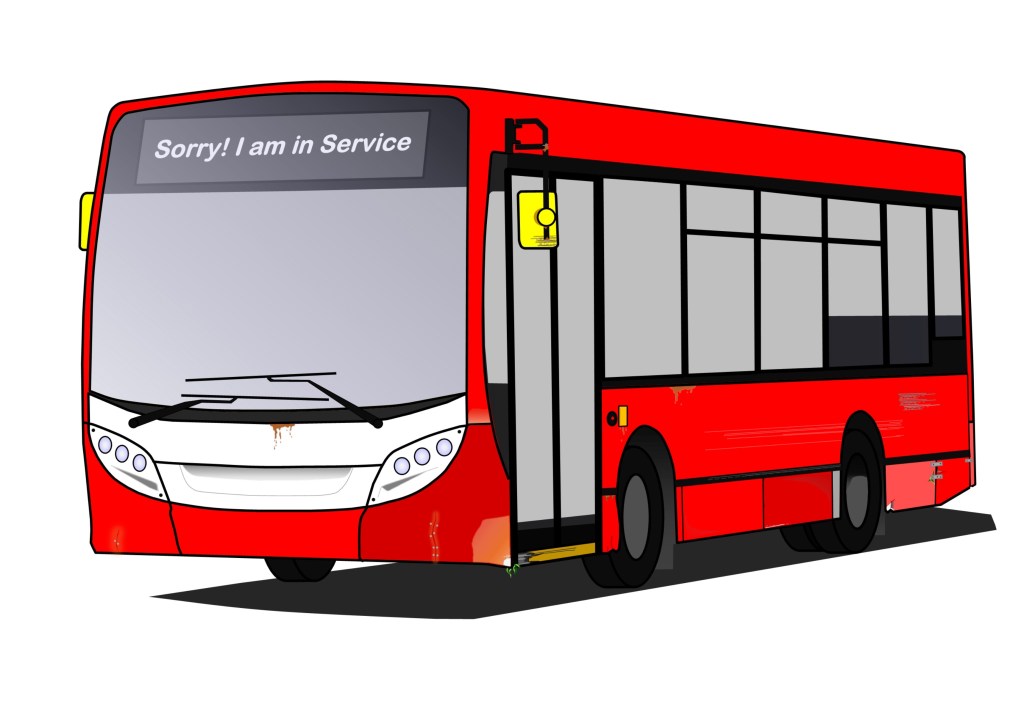
The condition of this bus in comparison to its stable mates lead me to dig into its history a little further. I was curious as to how and why one vehicle was allowed to deteriorate to such an extent when the depot was clearly able to maintain decent standards with the rest of the fleet.
When I started to research this story, the first startling revelation was that this vehicle was only refurbished some 10 months prior to my visit to the town. I learnt via various sources, that once the contract this vehicle was purchased for had come to an end, after 5 years, our subject vehicle and its 2 sisters all received a small refurb that included any necessary repanelling and a complete repaint. This meant that all the damage and deterioration had taken place in only a short space of time, and due to the patchwork of repairs and prangs I concluded that it wasn’t as a result of just 1 or 2 incidents.
As I continued to learn more, I started to suspect that the real issues were down to something peculiar to either the type of vehicle or the type of work it was doing. Now, as an 8.9m ADL E200, it is hardly a difficult vehicle to drive. The overhangs are not extreme and the short wheelbase should allow it to be rather manoeuvrable. So what about the work it was doing?
This particular vehicle, it would seem, was usually allocated to a certain contracted service in and around a nearby market town. This service employs 1 vehicle for 8 hours a day, connecting all the side streets, residential schemes and railway station to one another along a circular route and is also used to connect to through services for the nearest major town some 11miles away.
As I suspected, it was indeed this particular route that was the reason this vehicle was so down-at-heel. The narrow streets, tight corners and parked cars along the route means there is very little room for the buses providing this service. As a result, scrapes with hedges, high kerbstones and other vehicles are common place.
In a social media thread I saw, a mechanic at the company in question tried to defend the general untidiness of the vehicle. They maintained that this vehicle was considered some sort of sacrificial lamb; always allocating it to the same working knowing it would come back at the end of the day damaged meant other vehicles were spared the same fate. There has to be some respect for that logic, however I do wonder if there is a bigger picture going unseen here.
I understand that the damage sustained on a given day regularly sees the vehicle off the road the following day. This might mean that over the 6 days this service operates each week, our subject vehicle is perhaps only available for 4 ½ of these. This therefore means that this service must operate using spare resource around 25% of the time, which gets me wondering if this contract is actually worth operating?
So what lessons should we learn from this vehicle?
Well, when resourcing any service we shouldn’t necessarily ask ‘do we have a vehicle’ perhaps we ought to instead ask ‘do we have the right vehicle’. Not an Earth-shattering revelation, however in this instance I can’t help but think that it was simply convenient to allocate one of these recently surplus ‘small buses’ to ‘the route that’s a bit tight’ and replace the aging and predictively shabby vehicle used at the time.
I do however think that there is another, more important, lesson that we could learn from this example. Perhaps we should occasionally flip our viewpoint and question whether we have the right route for the bus. This service would be difficult, politically, to remove, however over the years it has been operating, the physical dimensions of cars has increased, so too has the number of them. The roads have unsurprisingly not grown however. Therefore, where we encounter a line of parked cars, the available road space that was once ‘Narrow’ is frequently becoming ‘Too Narrow’, leading to problems.
So what would be the answer in this case?
Well, it’s difficult to say. Certainly operating in the way outlined above is very costly and could ultimately prove unsustainable. This suggests a different approach should be taken, however, as mentioned, simply re-routing the service away from the most challenging points will be difficult. So the only option seems to be that, if the available road space is getting smaller, then so to should the bus.
Moving to a smaller, perhaps van derived, vehicle to operate the route does however have its own problems.
- There is the fact that it would possibly be a unique vehicle to the fleet, which could result in further costs to maintenance. Also, what do you do when the vehicle is unavailable?
- Van derived buses are often criticized for not being as robust, operationally, as purpose built buses, so the constant strain this route demands may prove too much for such a vehicle to handle in the long term.
- Another problem is that the seating capacity would obviously suffer as a result of the reduction in vehicle size. Perhaps this is ok at present, however if the change in vehicle size would make the service easier to operate and therefore more reliable, then growth may hopefully be on the cards. This is where the capacity of a van derived product would stifle potential growth.
- Finally, reducing the vehicle size may only be a short term solution unless the issues of parking and limited available road space are addressed.
So, hopefully this tale of one particular shabby bus has opened our eyes to the complicated series of events that can lead to a vehicles neglected appearance. Hopefully too, it can teach us to question all aspects of our operations regularly to assess the suitability, not only of the vehicles in use, but also of the routes we choose to take.
 Written by; Kieran Proctor, Business Development Manager, Omnibus
Having started as a bus driver with Stagecoach in 2007, Kieran quickly worked his way through the company becoming a scheduler in 2009 at their East Midlands subsidiary. His time at the Lincoln head offices gave Kieran exposure to a vast range of different operating territories including city networks, rural outstations and seasonal tourist towns.
After only a couple of years in the East Midlands Kieran was seconded to a small team tasked with organising transport for the media, athletes and officials at the London 2012 Olympic and Paralympic Games. This project saw many scheduling challenges and unique pressures, all of which were successfully navigated by the team.
In 2013 Kieran joined the software provider Omnibus in a business development role. Since then he has scheduled on a consultancy basis for bus and light rail operators of various sizes across the UK, Middle East and Australasia.
When Omnibus took on the running of Jim Hulme’s long established TransACT manual schedules training course in 2018, Kieran became heavily involved in the project and has already used his scheduling knowledge to help teach the next generation of schedulers. Going forwards, Kieran hopes to use this course and his experience to continue to reskill the schedulers within the UK bus industry.
 The TransACT Blog